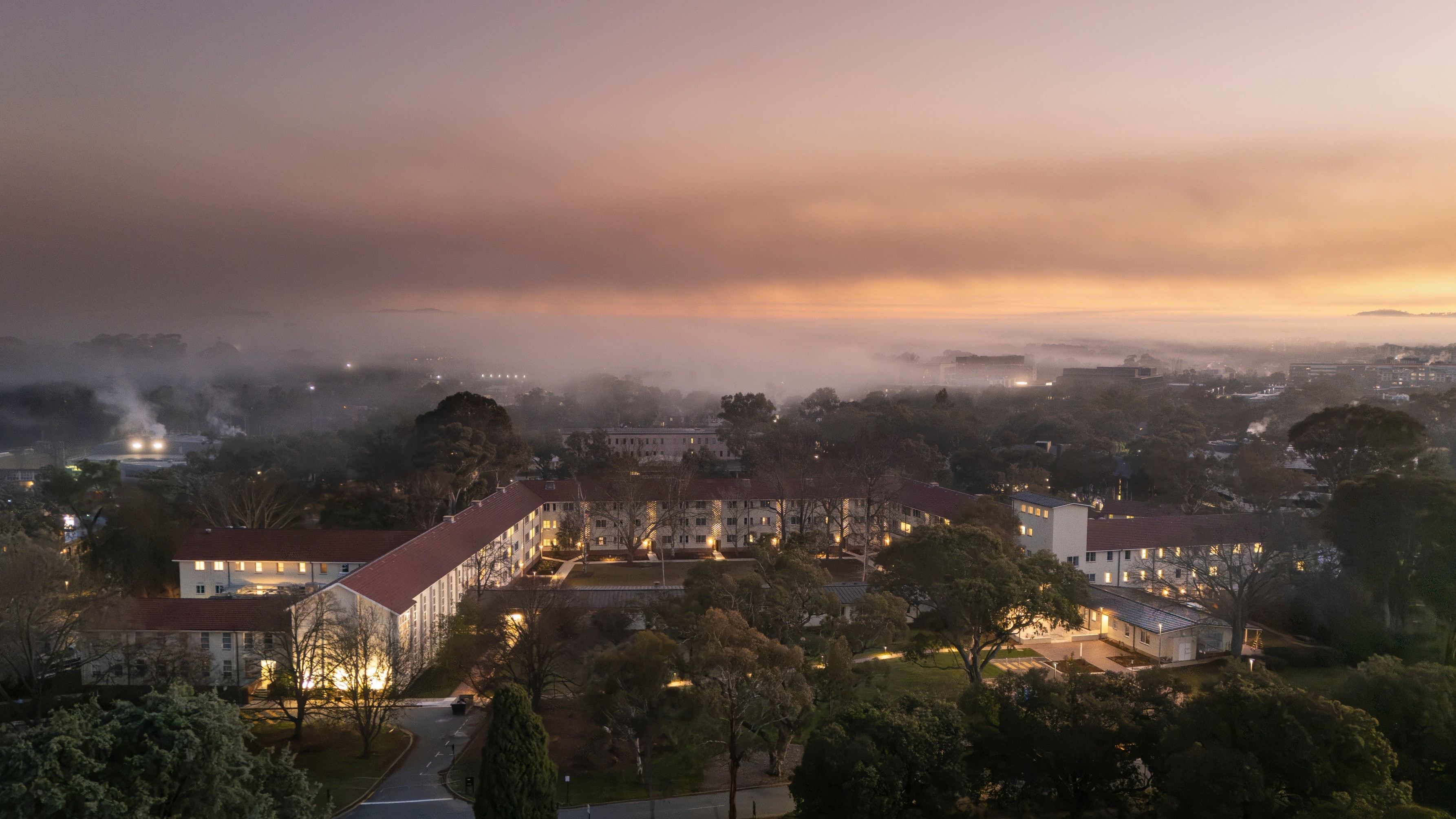
It took just ten minutes.
Ten minutes of hail and torrential rain in January 2020 badly damaged one of the oldest and most cherished buildings at The Australian National University (ANU).
For a small group of people, it also marked the beginning of a six-and-a-half-year commitment to bringing University House back.
Among them were Chief Campus Environment Officer Jeremy Matthew, ANU Hail Remediation Project Director Ben Condren, and University House Manager Polly Prakash, as well as colleagues across Campus Environment and the Hail Remediation teams.
At first, the priority was simple: make the building safe.
While Canberra was still coming to grips with the storm, University House staff and members of the Campus Environment team moved quickly to secure the site, protect and relocate guests and resident students, assess the damage and begin the enormous task of working out what had happened.
The first reaction was, in one word, “shock”.
The hail had shattered the roof and broken windows, leaving glass everywhere. Rain followed, finding its way into parts of the building that had been protected for decades. What looked like a damaged roof from the outside had become a much bigger problem inside.
The restoration team faced some big questions.
How much damage was there? What could be saved? How could a Commonwealth Heritage-listed building be repaired without losing what made it special? How could modern safety and accessibility requirements be introduced without compromising the original building?
The challenge they took on
What followed was far more than a repair job. It became one of the University’s most complex restoration projects and was further complicated by the COVID-19 pandemic.
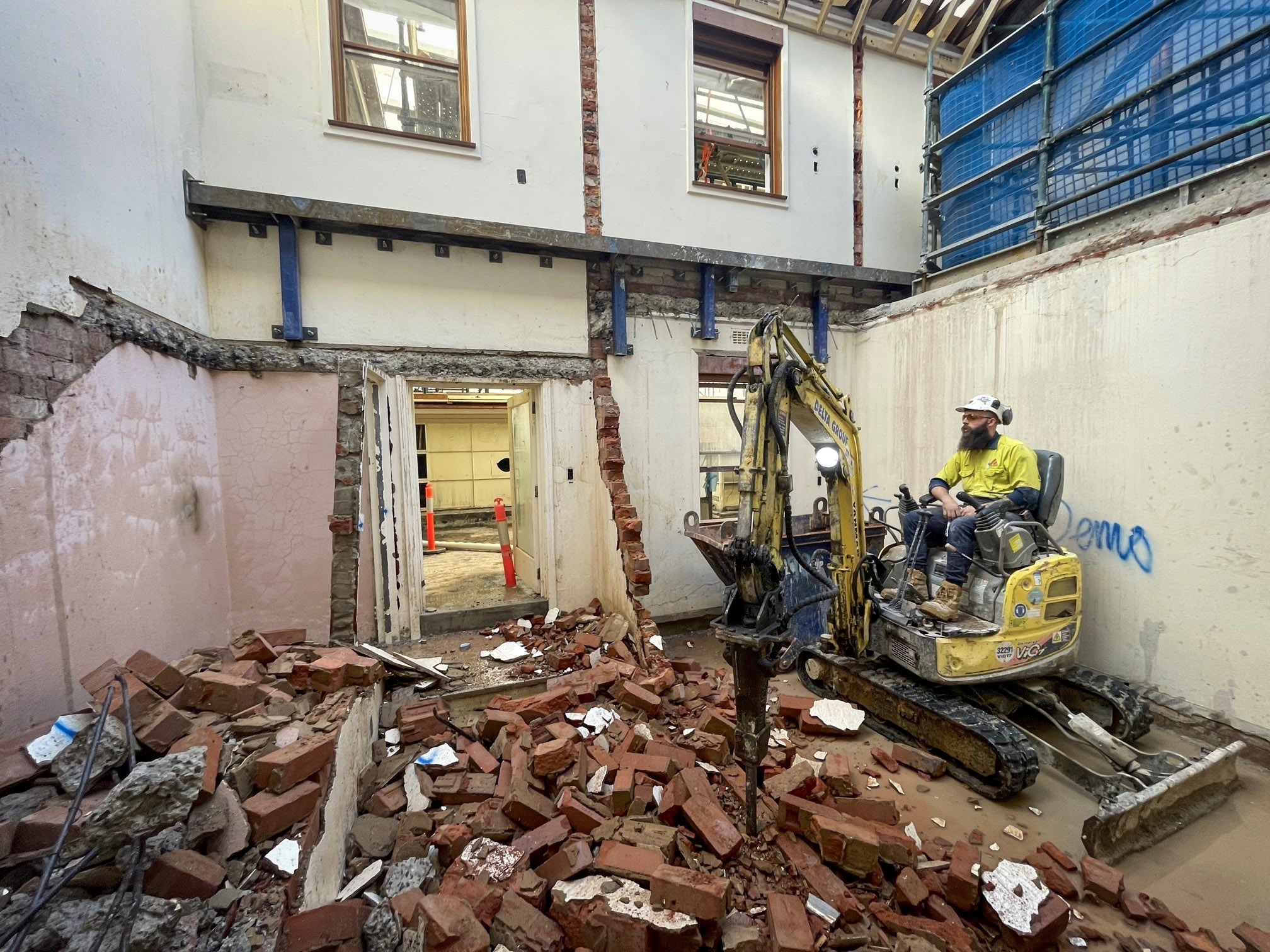
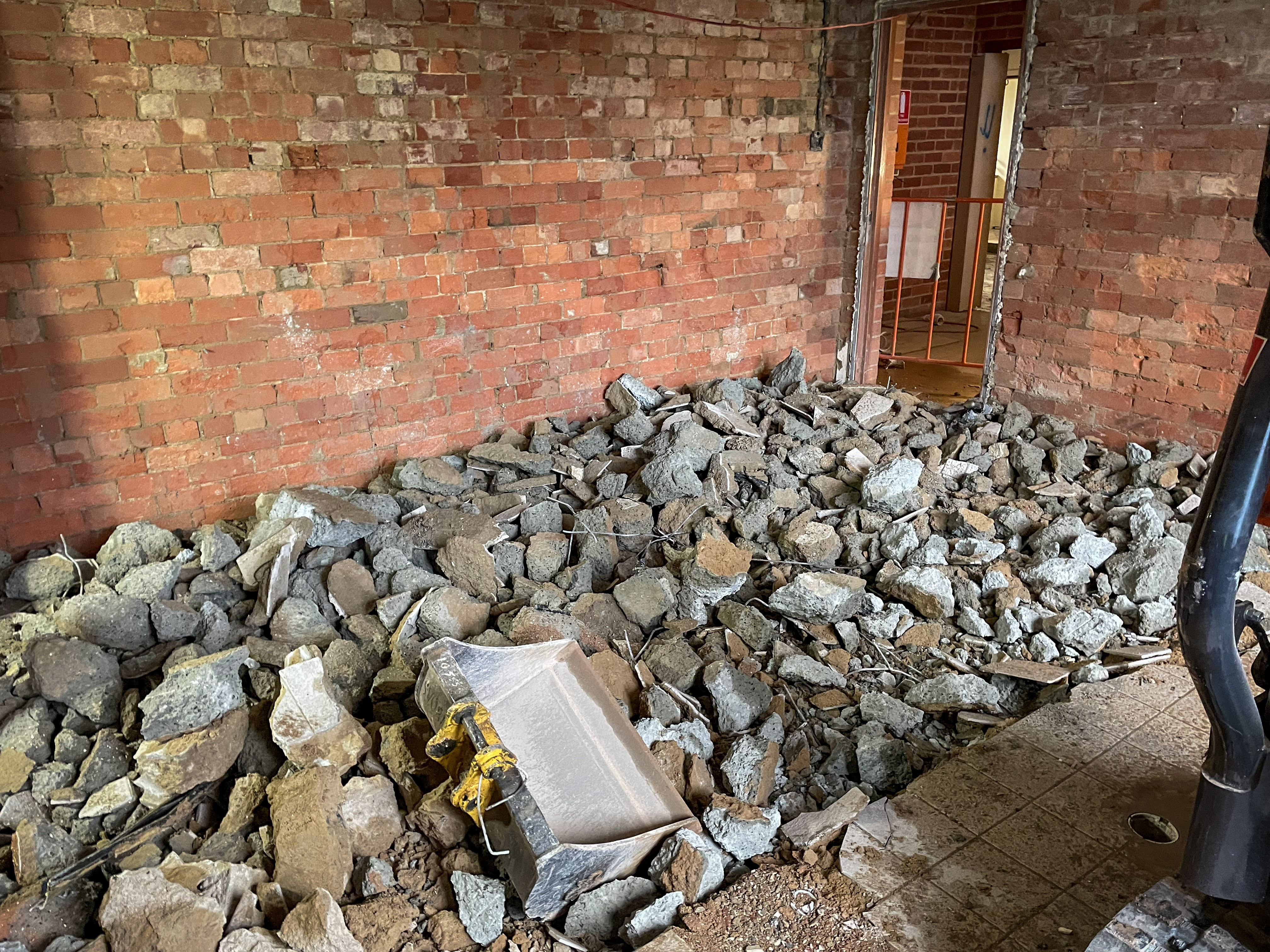
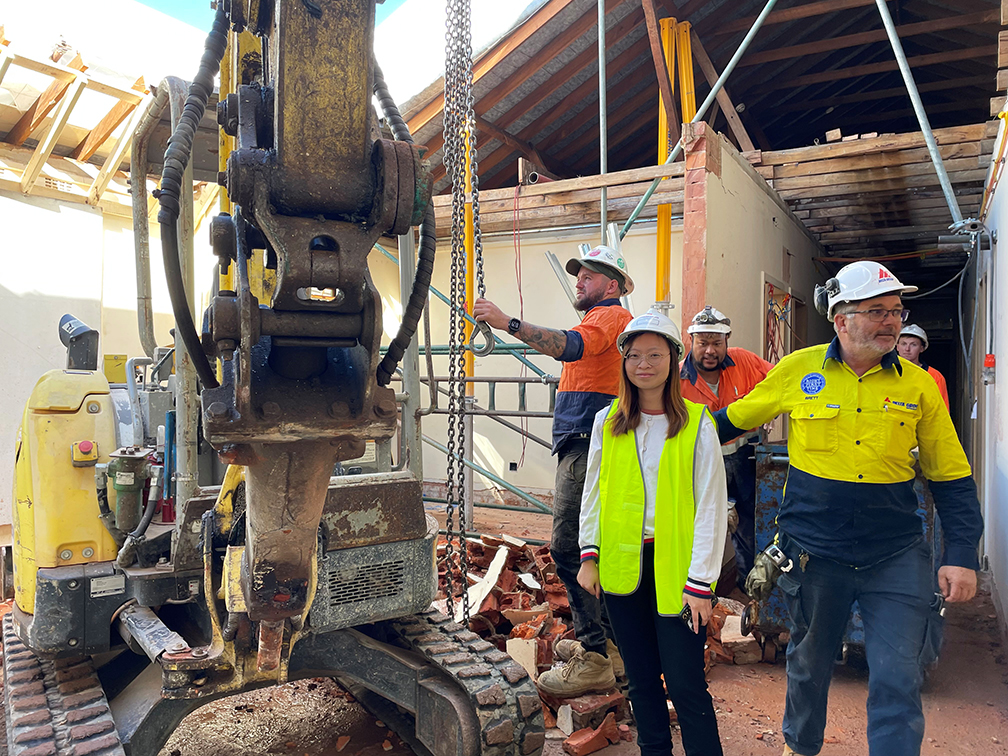
Month after month, year after year, Jeremy, Ben, Polly and colleagues worked alongside architects, builders, and heritage specialists to bring the 72-year-old building back to life. Their work went beyond repairing storm damage, preparing University House to safely reopen, meet modern day compliance standards, and serve the ANU community for decades to come.
Restoring the building meant carefully peeling back the damage and rebuilding much of what lay underneath.
The work included a complete rewiring of water-damaged electrical systems, installing new fire detection and alarm systems, and adding fire-rated walls, ceilings and doors.
Asbestos and other hazardous materials were identified and safely removed.
New lifts, accessible rooms and upgraded paths of travel were introduced to meet modern accessibility standards and ensure the building can be enjoyed by all.
The building’s systems have also been transformed for the future. It is now fully electric, in line with the University’s Net Zero targets, with heating, cooling, hot water and cooking systems all electrified and gas infrastructure removed.
At the same time, heritage timber, ceilings and finishes were painstakingly restored, preserving the distinctive character of University House.
It was a delicate balancing act: introducing modern safety, accessibility, sustainability and building systems into a heritage building that was never designed to accommodate them.
Much of that work had to happen almost invisibly, threading new infrastructure through the existing building without compromising the features that make University House so distinctive.
The people behind the progress
When University House opened in 1954, builder Howie Moffat described it as "a credit to the courage and foresight of University Council and the planning of the architect", saying it had been "faithfully constructed to last for all time".
More than 70 years later, the Project Control Group, Campus Planning Committee, and Hail Steering Committee at ANU approached the restoration with the same mindset and sense of stewardship.
Every decision had to be made with the building’s heritage in mind. The challenge was to prepare University House for its next 70 years without losing the story of the decades that came before.
That meant years of careful work behind the scenes.
Every third Wednesday of the month, the same project team who responded to the storm in 2020 continued to sit down together to plan, solve problems, ensure heritage compliance, and track the work through to completion.
There were no cameras at those meetings and rarely a headline to mark the progress. Just the steady, often unglamorous work of people who had committed to this restoration.
“Projects like this are never about one person. They're about people who care deeply, place their trust in one another and refuse to give up,” says Ben Condren.
"I'm immensely proud of what our team has achieved together, and seeing University House restored and ready to serve the ANU community again is a fitting reward for everyone who believed in its future."
Recognising the team who saw it through
Many people played a role in the restoration along the way, including University leaders, Council members, architects, builders, heritage specialists and contractors. But throughout the entire journey, the project team – including Jeremy, Ben and Polly – has remained a constant thread, from the first moments after the storm to reopening day.
After more than six years of planning, problem-solving and painstaking restoration, University House is ready to welcome the community once again.
On Friday 14 August, University House will reopen its doors, with an official ceremony bringing together staff, students, alumni and guests. It marks the return of one of our most significant heritage buildings, in time for ANU 80th birthday celebrations.
But it also marks the end of a remarkable chapter and celebrates the people who never stopped showing up and quietly carried this project through – a fantastic representation of our ANU values of excellence, integrity, respect and collegiality.
"Long after the storm had passed, the same team remained," says Jeremy Matthew.
"Their legacy is not simply a restored building, but the care, persistence and stewardship that brought University House back to life.”